
August 1st, 2025 | Author: Kelly Zhu
Introduction
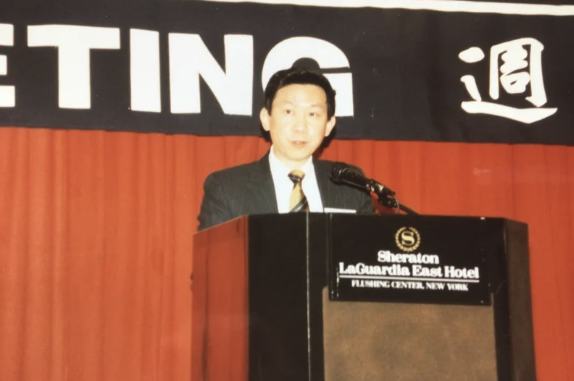
As one of the first presidents, Dr. Henry Zhou, the past president of 1997-1999 of the Association of Chinese American Physicians (ACAP), is a respected and accomplished anesthesiologist whose journey to becoming a physician is inspiring. He is currently working at Valley Hospital in New Jersey, where he has remained for 26 years. His story reflects perseverance, adaptability, and a deep sense of purpose.
Early Life and Medical Education in China
Dr. Zhou’s path to becoming an accomplished anesthesiologist in the United States began in China still recovering from the effects of the Cultural Revolution. A graduate of what is now known as Zhongshan Medical College – formerly Sun Yat-sen University of Medical Science and one of China’s top medical schools – Dr. Zhou belonged to the first wave of students admitted to college after the Cultural Revolution, a time when standardized university entrance exams had been suspended. Reflecting on that era, Dr. Zhou said, “There was no real exam for university during the Cultural Revolution. We were the first group to be admitted after things reopened, which was a big deal.”
After graduating in 1982, Dr. Zhou moved to the United States to pursue a Ph.D. in neuroscience at the University of Pittsburgh. During that time, many of his classmates began entering clinical training programs in the U.S. that inspired him to do the same. “I realized that passing the USMLE – though it had a different name back then – was the gateway to residency training,” he explained. He studied hard, passed the exams, and earned his Ph.D., setting the stage for a transition into clinical medicine. Eventually, Dr. Zhou completed his residency and began his career as an attending anesthesiologist at NYU.
After five years there, he transitioned to private practice at Valley Hospital in New Jersey, where he has worked for over 26 years. While his original background in China was in ophthalmology, Dr. Zhou found anesthesiology to be a natural fit. “During my Ph.D., I became deeply interested in neuroscience and pharmacology – how drugs interact with the nervous system,” he said. When ophthalmology proved to be a highly competitive field for residency, anesthesiology became a second choice that quickly grew into a passion.
Building a Community: The Birth of ACAP
In 1995, Dr. Zhou became one of the founding members of the Association of Chinese American Physicians (ACAP), although it was originally named the American Association of Chinese Physicians. At that time, he was already an attending at NYU. “When I heard ACAP was forming, I joined a small discussion group of about 20 people,” he recalled. “From there, we formed the board and began organizing our first annual meeting.” That first meeting brought together roughly 100 attendees, most of whom were recent graduates or in the early stages of preparing for residency. Recognizing the need for a support system, Dr. Zhou helped grow the organization’s reach. During his term as Vice President and then President, he focused on building local chapters – most notably, one in New England – and expanding ACAP’s visibility among Chinese medical graduates in the U.S. Though other Chinese-American medical organizations have emerged – particularly in California and Texas – Dr. Zhou believes ACAP had a special opportunity as the first of its kind. “We missed the chance to expand nationally when WeChat and other tools could’ve helped us connect with physicians in other states,” he admitted. “Now, newer organizations have more members because they made those broader connections.” Still, he is proud of ACAP’s foundation. “Seeing the organization grow from 20 members to nearly 1,000 today is incredibly rewarding. Many of our early members are now practicing physicians, and that’s a success.”
Achievements and Challenges as ACAP President
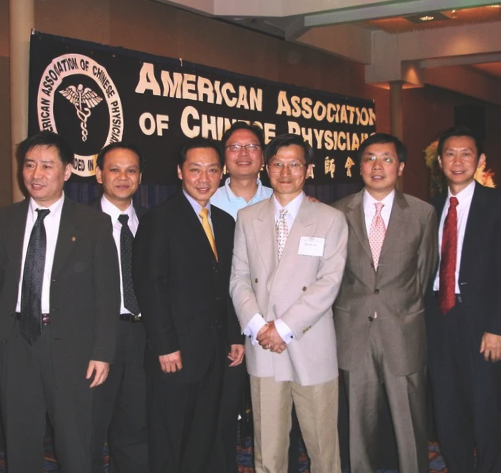
One of the major challenges during Dr. Zhou’s presidency was managing internal conflicts. “The first president had disagreements with board members and eventually stopped fulfilling his duties,” he said. “I had to step in and hold the organization together during that transition.” Another issue was bridging the cultural and educational gap for Chinese physicians newly arrived in the U.S. “Many members lacked strong English skills or weren’t familiar with the American healthcare system,” he said. However, one of his major achievements in this area was organizing lectures on residency applications, career development, and navigating private versus academic medicine in order to help Chinese physicians like himself.
Looking Ahead to the Future
He also stresses the importance of bringing younger generations into ACAP. “Our founding members are approaching retirement. If the organization wants to thrive, it needs new blood.” His advice for current ACAP leadership is simple but powerful: broaden the scope beyond the New York area and build meaningful connections across the country.
A Life Beyond Medicine
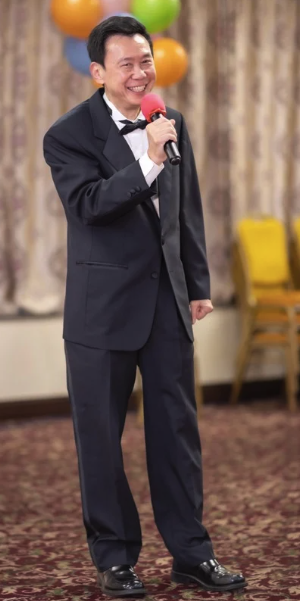
Outside of his professional life, Dr. Zhou enjoys staying active and creative. He runs, swims, and enjoys singing in his free time. It’s a reminder that behind every accomplished physician is a person with passions that extend far beyond the operating room.
About the Author

Kelly is a sophomore at Manhasset High School in New York. She enjoys rowing in her high school team, playing the viola, and reading. She has been volunteering at many ACAP events including health fair, science fair, annual convention, mock interview, holiday parties, etc. She enjoys meeting new people and contributing to the great work ACAP has been a part of. She is interested in pursuing a future career in medicine.